TST LAB / Notes & Essays
A Fabric Label Is Not a Durability Score
Fibre percentages and care instructions answer useful questions, but they do not rate a garment's seams, construction, fit for use or lifetime.
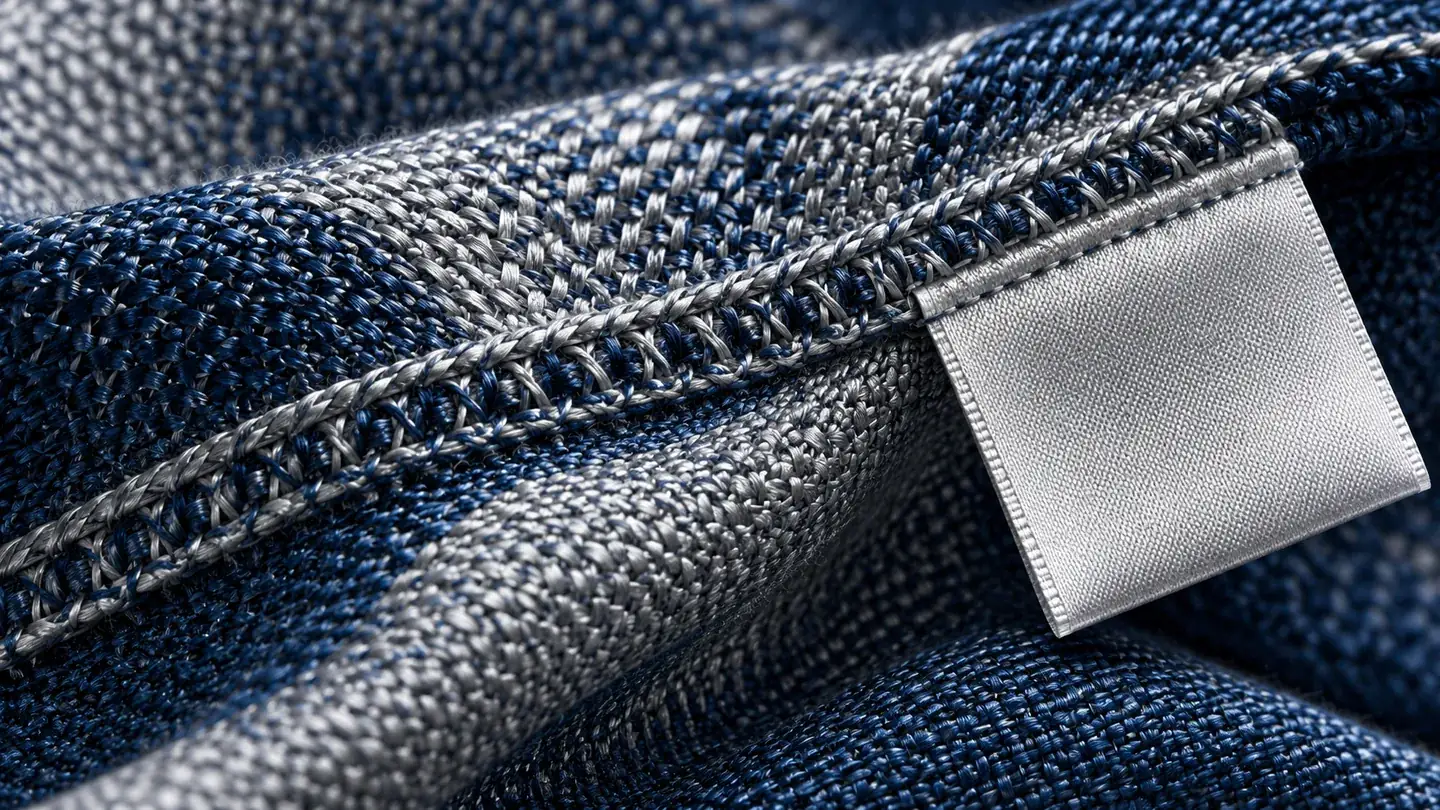
What the label is for
A garment label is an information tool, not a report card. Depending on the market and product, it may state fibre composition, care instructions, country of origin or other required information. Those facts can help you understand what the item is made from and how the seller says it should be maintained.
The rules are jurisdiction-specific. In the United States, the Federal Trade Commission explains that most covered textile and wool products need fibre content, country of origin and responsible business identity, while care instructions are governed by a separate rule. In the European Union, Regulation 1007/2011 governs names and disclosure of textile fibre composition. These frameworks do not make every label worldwide identical.
Fibre percentages are not a life estimate
“100% cotton” or “polyester blend” tells you about fibre composition by weight under the applicable labeling rules. It does not, by itself, say how many washes the garment will survive, whether seams will split, whether a knit will distort, or how its colour will change with your particular wear and care.
Durability is a property of the garment in use. Fibre type matters, but so do yarn and fabric structure, weight, finishing, seam construction, stress points, fit, intended activity, washing, drying, sunlight and repair. A fibre that performs well in one context can be poorly suited to another design or care routine.
The research literature makes the measurement problem visible. A 2025 open-access framework for physical garment durability notes that studies have used different combinations of tests for abrasion, pilling, dimensional stability, tensile or seam strength. The authors argue that garment category and intended use matter, and that one test cannot capture every mode of failure or the full variability of real wear.
What testing can tell us
Standardized tests make specific comparisons possible. ISO 12947-2, for example, specifies a procedure for determining specimen breakdown in a Martindale abrasion test. AATCC lists methods covering properties such as dimensional change after laundering, colourfastness, abrasion and seam twist. Each test addresses a particular question under defined conditions; none is a universal durability score for an entire garment.
Lab tests can be repeatable without reproducing every person’s closet. A fabric-abrasion result is not a prediction of how long every pair of trousers will last. A seam-strength result does not tell you whether the fit will create unusual stress. And passing one care test does not guarantee the garment is indestructible under every wash cycle.
A practical reading checklist
When you look at a label or product claim, ask:
- Which fibres are listed, and under which country’s labeling rules?
- Are care instructions specific enough for how you plan to wash and dry the item?
- Does the seller provide construction or test information beyond fibre percentages?
- Is a test result tied to a method, garment type and stated conditions?
- Are important seams, closures and stress points reinforced appropriately for the intended use?
The label can narrow uncertainty; it cannot answer every question. Treat fibre content and care guidance as useful inputs, then assess construction, purpose and evidence separately. A percentage is a description of material composition—not a durability score.